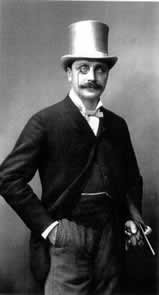
The history of the Top Hat is somewhat interesting, with some saying the High Silk Hat was invented in Canton circa 1775, by a Chinese hatter for a Frenchman who carried his headpiece back to Paris, while others thought it was invented in Florence circa 1760. I myself believe it to have been first produced in England and accredited to a hatter by the name of George Dunnage, circa 1793.
In the 18th century beaver felt was still preferred for the highest quality hats, but mixtures of beaver and wool, or wool and rabbit were used for the cheaper products to which the lower orders still use to this day.
The process by which the hatter's apprentice had to master the process can be summarised briefly here:
The coarse guard hairs were plucked from the beaver pelt
which was then brushed with a solution of mercury nitrate to raise the scales on the fur shafts so that they would lock firmly together, a process known as carotting. If carried out in a poorly ventilated room the mercury fumes could damage the brain, hence the phrase,"As Mad as a Hatter."
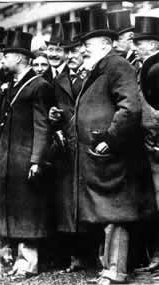
In 1797, John Hetherington, a haberdasher located in Charing Cross
was described by The Times as appearing in the Strand in what Hetherington called, "a Silk Hat," a tall structure having a shiny lustre and calculated to frighten timid people. Silk plush thus appeared at almost the same moment and although the two were to become inseparable in the latter 19th century, the silk top hat was slow to be accepted. The final depletion of the American beaver in the mid 19th century ushered in the reign of the silk top hat.
The shiny lustre of hatters plush had to be maintained by regular brushing with a velvet pad and some sharp dressers in the Edwardian era used to call in at their hatter's daily to have their silk top hats ironed.
Other technical developments were taking place in the hatters craft in the first half of the 19th century. The scientific approach to fit which was a feature of men's tailoring in this century was also being applied to hats.
From 1817, they were made on an oval block, whereas previously they had been made circular and shaped to the wearers head by using a hat screw.